
AI in Human Resources: Just Ask “Who Was Late Today?”
8 a.m. Instead of opening the attendance report, then the leave file, then calling the branch manager, you type one question: "Who was late today?" That is AI in human resources working as it should: an answer from your company's own data, not a guess. So what does it actually offer? And where are its limits?
What Is AI in Human Resources?
It means using systems that understand and analyze employee data, answer questions in plain language, and carry out some routine actions at the user's request. The goal is not to replace the HR team, but to free it from manual searching and compiling so it can focus on decisions.
Where Does AI Help in Human Resources?
Attendance: see attendance, lateness, and comparisons between employees in moments.
Leave: look up requests and approve them without jumping between screens.
Penalties: summarize violations and keep their record organized.
Tasks: create tasks, assign them to employees, and follow up.
Performance: compare branches and departments, with summaries that support follow-up.
Want to try asking yourself? Try OLU and Saif AI free for 7 days, no credit card required
Saif AI: OLU's Smart HR Assistant
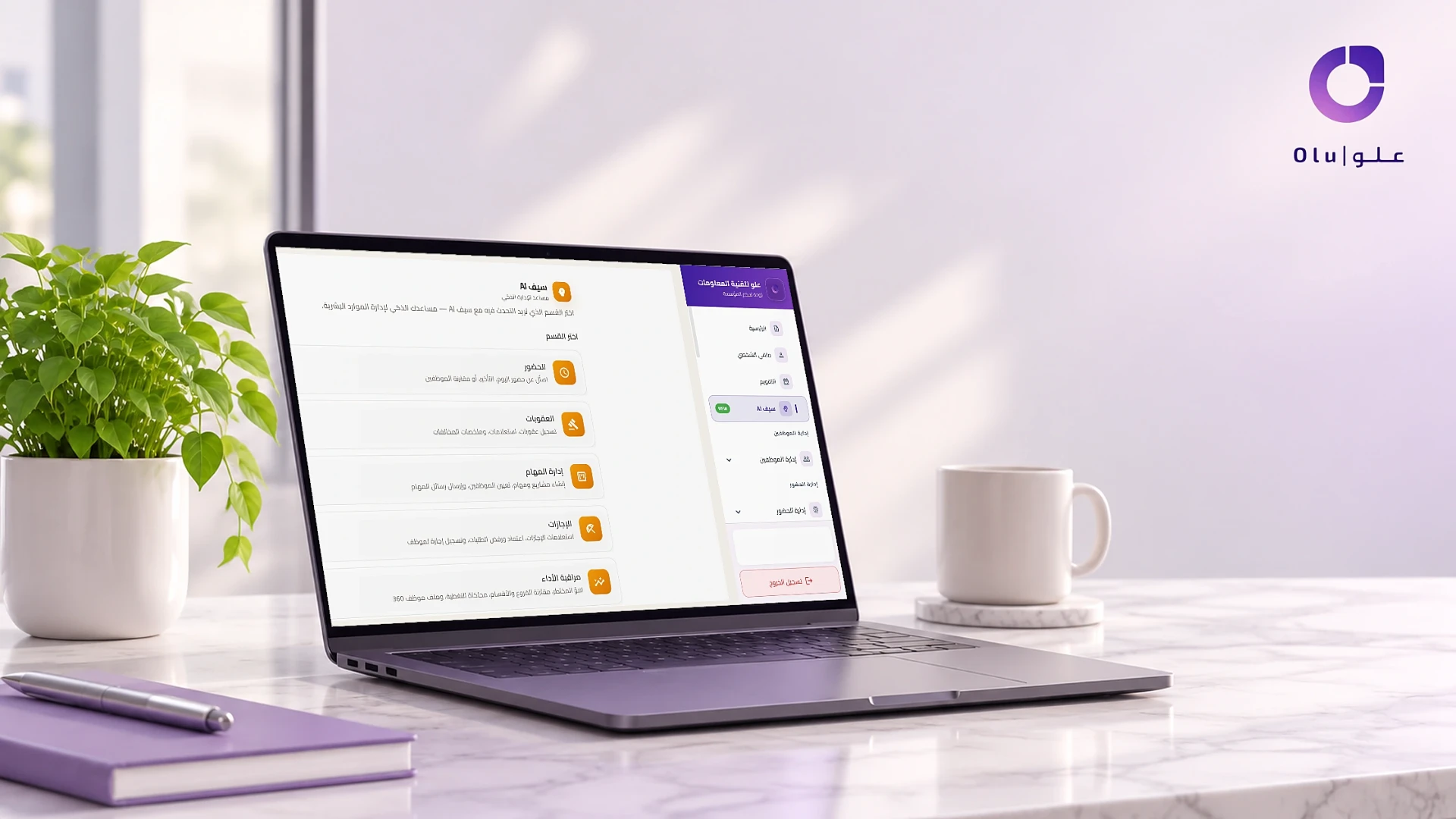
Saif AI is the smart assistant built into OLU. It starts with a daily summary of attendance, absences, and active actions, then you choose the section you want to talk about:
Attendance: ask about today's attendance and lateness, and compare employees.
Penalties: record penalties, look them up, and get violation summaries.
Task management: create projects and tasks, assign employees, and send task messages.
Leave: look up leave, approve or reject requests, and record an employee's leave.
Performance monitoring: risk prediction, branch and department comparisons, feedback simulation, and a 360 employee profile.
Saif Acts, It Doesn't Just Suggest
What sets Saif AI apart is that it goes beyond conversation: it reads the data and carries out actions inside the system, strictly within the user's permissions. Ask it to approve a leave request or assign a task, and your request becomes a real action in OLU, while it only accesses the data and actions you are authorized for.
Questions You Can Ask Saif AI
How many employees were late today?
Compare this week's attendance across departments.
What leave requests are pending for me?
Show this month's violations summary.
Create a new task and assign it to an employee.
What Does Your Company Gain from Saif AI?
Less time searching: one answer instead of moving between reports and files.
Daily follow-up: a daily attendance and absence summary as soon as you open Saif.
Data-based decisions: comparisons between branches and departments that show you what needs attention.
Using AI Responsibly
AI supports decisions; it does not remove management's responsibility. Recording penalties, for example, remains subject to the Labor Law and your company's approved work regulations. Use summaries and analysis to speed up work, and keep the final decision with the responsible manager. For legal details, refer to the Ministry of Human Resources and Social Development.
FAQ: AI in Human Resources
Does AI replace HR staff?
No. It cuts down the searching, compiling, and repetitive tasks so they can focus on decisions and on their relationship with employees.
Do I need technical skills to use Saif AI?
No. You type your question in plain language and Saif answers directly.
Can Saif AI see all of the company's data?
No. Saif works within the user's permissions, so it only shows the data and actions that user is authorized for.
Conclusion
AI in human resources means faster answers and decisions based on data. With Saif AI in OLU, you follow attendance, leave, penalties, tasks, and performance from a single conversation.
Try OLU and Saif AI free for 7 days, no credit card required: olu.sa
This article is for general awareness and is not legal advice.